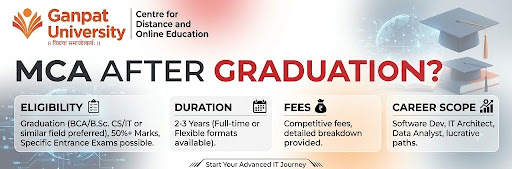
Yes, pursuing this postgraduate computing qualification, MCA after graduation, is a well-established, widely chosen path, and it remains open to students from a broader range of undergraduate backgrounds than many people initially assume. While a computing or mathematics-heavy undergraduate degree certainly helps, it is not the only route in, and plenty of graduates from other disciplines pursue this qualification successfully every year.
This piece walks through what the degree actually involves, who is eligible, how long it typically takes, what it costs, and the specific paths available to graduates coming from commerce or arts backgrounds rather than a computing one.
What This Qualification Actually Involves
Before getting into eligibility specifics, it helps to understand what the degree itself covers. An MCA course is a postgraduate programme focused on computer applications, covering programming, software development, database management, and increasingly, areas like data science and artificial intelligence, depending on the specific institution and electives chosen.
More formally, this qualification is known as a Master of Computer Applications, and it is designed to build both theoretical computing knowledge and practical, applied software development skills, making graduates suitable for a wide range of technology-focused roles after completion.
How Long the Programme Actually Takes
Planning around this degree requires a clear sense of the time commitment involved. Standard MCA duration is typically two years, split across four semesters, though some institutions offer an accelerated or extended format depending on a student's prior academic background and the specific structure of their programme.
Put another way, when prospective students ask about the Master of Computer Applications, how many years it takes to complete, the consistent answer across most recognised institutions is two years for the standard, full-time format, with part-time or work-integrated options sometimes taking slightly longer.
Cost varies considerably depending on the institution and format chosen. General MCA fees can range widely, from relatively modest figures at government-recognised universities to significantly higher amounts at private institutions, making it worth comparing several options directly rather than assuming a single expected price point.
Looking at this more specifically, understanding master in computer application fees at a shortlisted set of institutions typically involves checking not just tuition, but also examination fees, study material costs, and whether the fee structure covers the full programme or is billed on a per-semester basis.
The Path From a Commerce Background
Commerce graduates make up a meaningful share of applicants to this programme, and the transition is generally more accessible than expected. Pursuing this qualification, MCA after BCom, is a well-recognised path, provided the candidate meets the mathematics requirement, either through their undergraduate coursework or a bridge course offered by some institutions specifically for non-computing background applicants.
It is worth addressing the direct version of this question as well: can I do MCA after BCom? In most cases, yes, provided mathematics was studied at some stage of the qualifying education and the minimum aggregate percentage is met, though specific requirements do vary somewhat by institution.
A common and important follow-up concern involves whether MCA after BCom without maths remains realistic for commerce graduates who did not study mathematics as part of their degree. This varies significantly by institution; some strictly require prior mathematics exposure, while others accept candidates without it, sometimes with an additional bridge or foundation course to cover the gap before the main programme begins.
For commerce graduates looking for practical next steps, understanding how to do MCA after BCom typically involves confirming a shortlisted institution's specific mathematics requirement, preparing for any required entrance examination, and, where needed, completing a foundation course to build the necessary quantitative groundwork before formal admission.
The Path From an Arts Background
Arts graduates pursuing this qualification represent a smaller but genuinely present group, and the path, while less common, is not closed off. Considering this qualification, an MCA after a BA is possible at select institutions, particularly those that place less emphasis on a strict mathematics prerequisite and more on aptitude demonstrated through an entrance examination.
Addressing this directly: can I do MCA after BA? Yes, at institutions that do not mandate mathematics as a strict qualifying subject, though this route is less universally available than the commerce or science pathways, making it especially important to verify a specific institution's exact eligibility criteria beforehand.
A closely related concern involves whether MCA after BA without maths is genuinely viable, given that most arts degrees do not include mathematics as a core subject. This depends entirely on the specific institution; some accept arts graduates without any mathematics background at all, provided they clear the entrance examination, while others require at least basic mathematics exposure at the higher secondary level.
For arts graduates exploring this path seriously, understanding how to do MCA after BA generally involves identifying institutions that do not strictly mandate a mathematics background, preparing thoroughly for whatever entrance assessment is required, and being ready to demonstrate logical and analytical aptitude even without formal mathematics coursework to point to.
Thinking About This More Broadly
Beyond any single undergraduate background, it helps to view this simply as one of several MCA course options after graduation available to students finishing any bachelor's degree, provided the specific eligibility criteria of a chosen institution are met. Viewed this way, the decision becomes less about which undergraduate degree was studied and more about which specific, properly recognised institution's requirements a candidate can realistically satisfy.
A Framework for Judging Fit, Regardless of Background
Rather than assuming eligibility is either fully open or fully closed, it helps to check readiness against a few practical factors together. Call this the MCA Fit Check: whether mathematics was studied at some stage of prior education, comfort with logical and analytical problem-solving, willingness to catch up on foundational programming concepts if the undergraduate background did not include them, and genuine interest in technology and software development as a long-term career direction. A candidate who scores reasonably well across these factors is likely to manage the transition successfully, regardless of their specific undergraduate stream.
Comparing the Common Entry Paths
Since background plays such a central role in this decision, laying the common entry routes side by side makes the practical differences easier to weigh.
| Factor | From a BCom Background | From a BA Background | From a Computing/Science Background |
|---|---|---|---|
| Mathematics requirement | Often required, sometimes satisfiable through a bridge course | Frequently the biggest hurdle, varies significantly by institution | Generally already satisfied through prior coursework |
| Typical adjustment needed | Foundational mathematics and programming basics | Both mathematics and programming fundamentals | Minimal, given strong prior overlap |
| Institution availability | Wide, most institutions accept this background | Narrower, requires more careful institution research | Very wide, considered the most conventional route |
| Overall difficulty of transition | Moderate | Higher, though genuinely achievable at the right institution | Lowest among the three |
None of these paths is closed off entirely; each simply requires a different amount of preparation and a more careful search for institutions whose specific eligibility criteria genuinely fit the candidate's background.
What This Degree Can Lead To
Regardless of the undergraduate path a candidate arrives from, this qualification supports a fairly consistent set of career outcomes once completed. Common roles graduates move into include:
- Software Developer or Engineer
- Systems Analyst
- Database Administrator
- Web Developer
- Data Analyst
- IT Project Coordinator
- Quality Assurance Engineer
- Network Administrator
- Technical Consultant
A Few Reasons This Path Is Worth Considering Seriously
The most reassuring answer comes from looking at institution-specific support structures, bridge courses, foundational coursework, and structured mentoring, all of which are increasingly common precisely because so many students now enter this qualification from commerce or arts backgrounds rather than computing ones.
- Broader eligibility than commonly assumed — commerce and arts graduates are genuinely able to pursue this qualification at the right institutions
- Strong, consistent demand for technology skills — the underlying career outcomes remain in demand across almost every industry
- A genuine second route into technology careers — this degree offers a formal path into technical roles for graduates who did not originally study computing
- Flexible formats have widened access further — part-time and work-integrated options make this qualification more achievable for working candidates
- A clear, well-understood curriculum structure — the two-year, four-semester format is consistent and well established across most recognised institutions
For parents evaluating this decision, the underlying concern is rarely about the subject matter itself. It is almost always about whether their child, coming from a non-computing background, is setting themselves up for a genuinely difficult, high-risk transition.
Deciding Without Overthinking the Background Question
Interest in this qualification from non-computing undergraduate backgrounds appears to be growing steadily, reflecting broader demand for technology skills across almost every industry, not just traditional technology companies. This is likely to continue, with more institutions actively building bridge courses and foundational support structures specifically designed to help commerce and arts graduates transition into this field successfully, rather than assuming every applicant arrives with a computing background already in place.
The most reliable way to approach this decision is to focus on genuine interest in technology and problem-solving, then work backwards to identify institutions whose specific eligibility criteria realistically fit the undergraduate background already completed. Given how significantly requirements vary from one institution to another, the right approach is rarely to assume eligibility based on general assumptions, but to check the specific requirements of each shortlisted programme directly.
Frequently Asked Questions
Not always, though it remains common. Many institutions require mathematics at some stage of prior education, but some accept candidates without it, occasionally requiring a bridge or foundation course to cover the gap before the main programme begins.
The standard format takes two years, spread across four semesters, though part-time or work-integrated formats can sometimes take slightly longer depending on the specific institution and structure chosen.
Generally, yes, though the exact difference varies considerably. It is worth comparing fee structures across several shortlisted institutions directly, rather than assuming a single expected cost.
Yes, in most cases, since the early part of the curriculum is typically designed to build foundational programming knowledge from the ground up, even for students without prior coding exposure.
Not significantly, once completed. Career outcomes tend to depend far more on the specific skills developed during the programme and any practical project or internship experience, rather than which undergraduate degree a candidate originally held.
